

As commuting costs rise across Ontario, thousands of drivers and riders are turning to peer-to-peer carpooling to share travel expenses along major highways like the 401, QEW, and 417. However, understanding the legal distinction between commercial transportation and non-commercial cost sharing is essential.
In Ontario, commercial taxi and ride-hailing services operate for profit and require specialized municipal licensing, commercial vehicle insurance, and HST/GST collection. Peer-to-peer carpooling operates under a fundamentally different principle: non-commercial expense sharing.
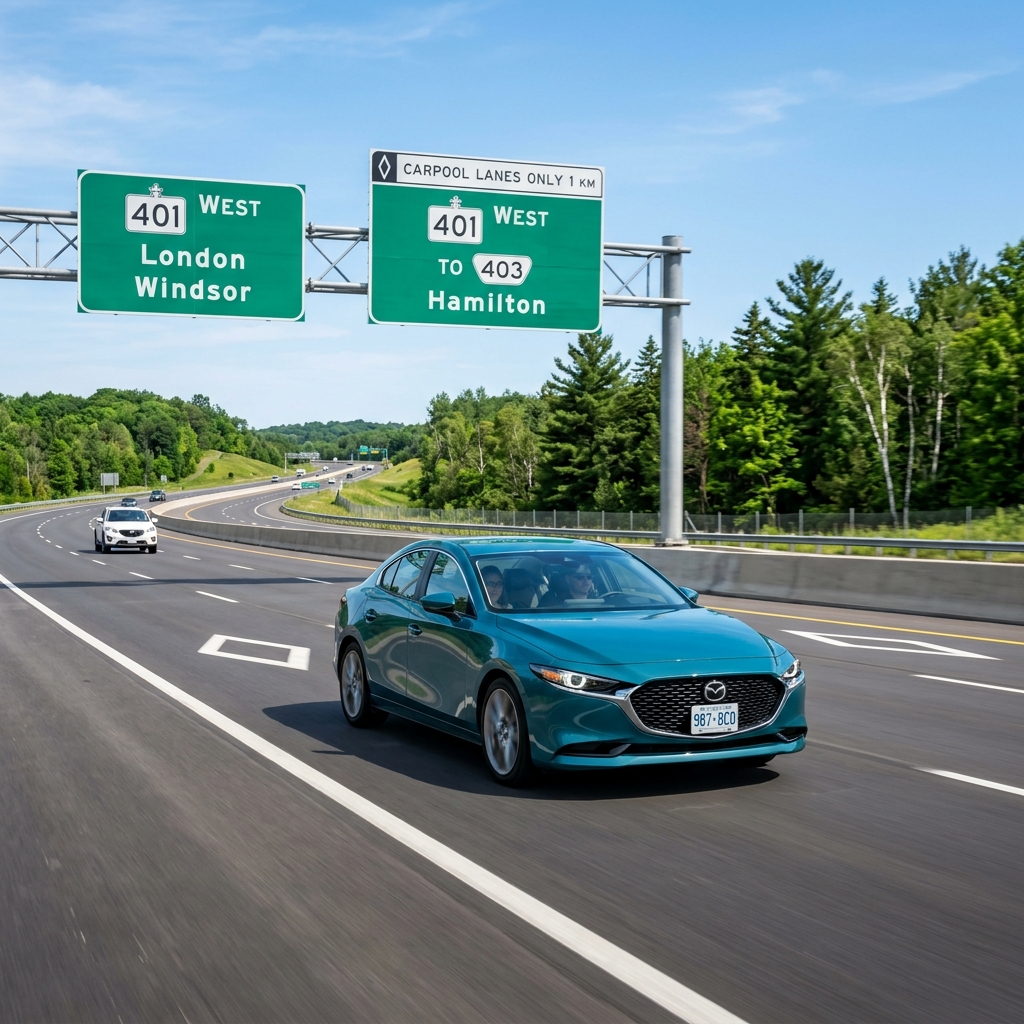
Under Canadian non-commercial carpooling guidelines, money collected by a vehicle owner from passengers to share actual trip costs (gasoline, oil, and vehicle wear-and-tear) is classified as tax-exempt cost recovery rather than taxable commercial income, provided the driver does not earn a profit.
"Under Canadian non-commercial carpooling guidelines, payments collected by drivers to offset actual vehicle operating costs on personal journeys are tax-free cost recoveries rather than taxable commercial income."
To ensure compliance with non-commercial guidelines, Cashride strictly caps driver trip listings to a maximum of 2 trips per day (representing a typical daily outbound and return commute). Drivers cannot operate continuous commercial circuits.

Riders pay a flat service connection fee directly on the app to confirm seat reservations. The driver receives 100% of the rider's direct fuel contribution (paid off-platform via Cash or Interac e-Transfer), keeping the financial transaction transparent and fully compliant with Canadian standards.

Dedicated to providing accurate regulatory guidance for peer-to-peer non-commercial carpooling and commuter cost recovery across Ontario, Canada.


Contact our Ontario support team or explore our community guidelines.
Leave a Comment